Showing posts with label Inflation. Show all posts

Energy Poverty and Affordability in Ireland

1. Overview and Context

Energy poverty refers to a household’s inability to access essential energy services (heating, lighting, electricity) at an affordable cost. It is not just about high bills—it also includes under-consumption of energy due to financial constraints, which can harm health and wellbeing.

The issue is becoming more important due to:

  • Rising energy price volatility
  • Climate transition costs
  • Geopolitical instability
  • Structural inequalities in income and housing

The report emphasises that energy poverty is multidimensional, shaped by:

  • Income levels
  • Energy prices
  • Housing quality and energy efficiency
  • Broader socio-economic inequalities

It is therefore both an economic and social justice issue.

2. Scale of Energy Poverty in Ireland

  • Around 14% of households self-reported energy poverty in 2024
  • Using broader measures, over 30% of households experience some form of energy affordability issue
  • In 2015, ~600,000 households (over one-third) met at least one energy poverty criterion

➡️ Key point:
The scale varies dramatically depending on how you measure it.

3. Measurement: Why It Matters

Ireland’s official measure:

  • HSEEI-10% → households spending >10% of income on energy

Problems with this measure:

  • Data only collected every 5 years
  • Misses households that under-consume energy (hidden poverty)
  • Underestimates the true scale

Alternative measures:

  1. Self-reported indicators
    • Inability to afford adequate warmth (IAAW)
    • Arrears on utility bills (AUB)
    • Available annually → useful for short-term monitoring
  2. Expenditure-based indicators
    • High energy share, low income–high cost, low expenditure, etc.
    • Better for structural analysis
  3. Union Indicators (combined measures)
    • Count households meeting any criterion
    • Provide the most realistic estimate of overall energy hardship

➡️ Conclusion:
No single indicator is sufficient. A multi-indicator system is essential.

4. Multidimensional Nature of Energy Poverty

Different indicators capture different groups:

  • Some households:
    • Spend too much on energy
  • Others:
    • Spend too little (due to deprivation)
  • Others:
    • Report hardship but don’t show high expenditure

➡️ Result:

  • Limited overlap between indicators
  • Each measure reveals a different “slice” of the problem

Union indicators show:

  • Energy poverty is far more widespread than any single measure suggests

5. Vulnerable Groups (Who Is Most at Risk?)

The report identifies consistent high-risk profiles:

Most vulnerable:

  • Low-income households
  • Renters (especially private sector)
  • Single-parent households
  • Unemployed individuals
  • Households with poor health or disability
  • Rural households
  • People in older, inefficient housing

Additional patterns:

  • Female-headed households face higher risk
  • Younger households rely more on supports
  • Vulnerabilities often overlap and reinforce each other

➡️ Key insight:
Energy poverty is clustered disadvantage, not isolated hardship.

6. Affordability Risk Framework

The report proposes a framework based on three factors:

  • Income level
  • Energy costs
  • Share of income spent on energy

Households are mapped into risk zones, identifying:

  • Current energy poverty
  • Future vulnerability (important for climate transition)

Structural vulnerability is defined as:

  • Income poverty plus additional risk factors (e.g. renting + single parenthood)

7. Severity: The Energy Poverty Gap

A major contribution of the report is estimating how severe energy poverty is.

Findings:

  • Households need:
    • €11–€45 per week to escape energy poverty
  • Average annual gap:
    • ~€480 per household

Policy implication:

  • Closing the gap for all vulnerable households would cost:
    • ~€370 million

Compare:

  • Universal electricity credit (2024): €550–575 million

➡️ Conclusion:
Targeted supports could achieve the same outcome at ~40% lower cost.

8. Structural Drivers

The main drivers of energy poverty are:

1. Income (most important factor)

  • Low disposable income = highest risk

2. Housing conditions

  • Poor insulation
  • Old buildings
  • Energy inefficiency

3. Broader cost pressures

  • Rent
  • Healthcare costs
  • Household composition

4. Energy prices

  • Short-term shocks can rapidly worsen affordability

Key finding:

  • Rising incomes in recent years helped offset:
    • Higher energy prices
    • Cost-of-living pressures

9. Policy Recommendations

A. Measurement Reform

Adopt a multi-indicator monitoring system, including:

  • IAAW (short-term shocks)
  • HSEEI-2M (structural burden)
  • LAEE (hidden deprivation)

B. Short-Term Policies

Use responsive tools during shocks:

  • Targeted energy credits
  • Bill supports
  • Deferred payment schemes
  • Emergency protections

⚠️ Must be targeted, not universal.

C. Long-Term Policies

Address structural causes:

  • Home retrofitting
  • Energy efficiency upgrades
  • Clean energy investment
  • Income supports

D. Better Targeting

Align energy policy with:

  • Social protection system
  • Welfare payments
  • Housing policy

10. Welfare and Energy Poverty

Energy-poor households typically rely on:

  • Housing supports
  • Child-related benefits
  • Fuel allowance
  • Disability supports

Less reliance on:

  • Old-age pensions (due to younger demographic profile)

➡️ Insight:
Energy poverty is closely tied to existing welfare dependency patterns.

11. Overall Conclusions

  • Energy poverty in Ireland is widespread, complex, and underestimated
  • It is driven primarily by income inequality and structural housing issues
  • Measurement using a single indicator is inadequate
  • Targeted policies are significantly more cost-effective than universal supports
  • Addressing energy poverty requires:
    • Coordination across energy, housing, and social policy

Bottom Line (for students)

Energy poverty isn’t just about high bills—it’s about how income, housing, and energy systems interact. If policymakers measure it badly, they target it badly, and that leads to wasted spending and missed households.

Eight Decades of Energy Price Shocks: Global Turbulence and the Irish Experience

Energy markets have shaped the global economy more than almost any other commodity market over the past 80 years. From geopolitical crises to technological revolutions, sudden shifts in oil and gas prices have repeatedly triggered inflation, recessions, and major policy changes. For Ireland — a small, open economy heavily dependent on imported energy — these shocks have often had outsized effects.

This article traces the major energy price shocks since the 1940s and explains how each one influenced both the world economy and Ireland’s economic trajectory.

1. 1956 – The Suez Crisis

Global Impact

The nationalisation of the Suez Canal by Egypt disrupted a key shipping route for Middle Eastern oil. Although the shock was short-lived, it caused temporary supply shortages and higher transport costs. Global growth slowed slightly, but no major recession followed.

Impact on Ireland

Ireland, still relatively underdeveloped and less energy‑intensive than later decades, experienced:

- Higher fuel import costs  

- Rising transport and heating prices  

- Mild inflationary pressure  

The overall macroeconomic impact was limited, but it highlighted Ireland’s vulnerability as an energy importer.

2. 1973 – The First Oil Shock

Global Impact

Following the Yom Kippur War, Arab OPEC members imposed an embargo on the US, Europe, and Japan. Oil prices quadrupled. The result was:

- A deep global recession (1974–75)  

- Surging inflation (“stagflation”)  

- Sharp falls in industrial output  

- A major shift in global economic power toward oil‑producing states  

Impact on Ireland

Ireland was hit extremely hard:

- Inflation soared above 20%  

- Unemployment rose sharply  

- Public finances deteriorated  

- The cost of living crisis eroded real incomes  

- Energy‑intensive sectors (transport, manufacturing, agriculture) suffered  

This shock marked a turning point, exposing Ireland’s dependence on imported oil and prompting early discussions about diversification and energy security.

3. 1979 – The Second Oil Shock

Global Impact

The Iranian Revolution and subsequent Iran–Iraq War removed millions of barrels per day from global supply. Prices doubled again. The world entered another recession in the early 1980s, intensified by aggressive interest‑rate hikes to fight inflation.

Impact on Ireland

Ireland entered one of the most difficult economic periods in its modern history:

- Inflation again exceeded 20%  

- Borrowing costs surged  

- Emigration rose  

- Public debt ballooned  

- Industrial competitiveness weakened  

The combination of global recession and domestic fiscal imbalances created a prolonged downturn that lasted much of the 1980s.

4. 1990 – Gulf War Oil Shock

Global Impact

Iraq’s invasion of Kuwait removed both countries’ oil exports from the market. Prices doubled briefly, contributing to recessions in the US, UK, and parts of Europe.

Impact on Ireland

Ireland experienced:

- Higher inflation  

- Slower growth in 1991  

- Pressure on household incomes  

However, the shock was short-lived, and Ireland’s economy — entering the early stages of the Celtic Tiger era — recovered quickly.

5. 2003–2008 – The Commodity Supercycle

Global Impact

Rapid industrialisation in China and emerging markets drove oil prices from around $30 to nearly $150 per barrel. Although the 2008 recession was caused by the financial crisis, high energy prices:

- Reduced consumer spending power  

- Increased production costs  

- Contributed to global inflationary pressures  

Impact on Ireland

Ireland was already overheating due to the property bubble. High energy prices:

- Increased transport and construction costs  

- Reduced disposable income  

- Added to inflation during the boom years  

When the financial crisis hit, the energy shock amplified the severity of Ireland’s downturn, though it was not the primary cause.

6. 2011 – Arab Spring Disruptions

Global Impact

Political instability in Libya and other producers pushed Brent crude above $120 per barrel. The shock contributed to:

- Higher inflation in Europe  

- Slower global growth  

- Pressure on oil‑importing developing countries  

Impact on Ireland

Ireland was in the middle of its EU‑IMF bailout. High oil prices:

- Increased household energy bills  

- Raised business costs  

- Complicated fiscal consolidation  

However, the broader European debt crisis had a far larger impact on Ireland’s economy than the energy shock itself.

7. 2014–2016 – Oil Price Collapse

Global Impact

The US shale boom created a supply glut. Prices fell from over $110 to below $30 per barrel. This was a negative price shock — beneficial for consumers but damaging for producers.

Impact on Ireland

Ireland benefited significantly:

- Lower petrol and diesel prices  

- Reduced inflation  

- Increased disposable income  

- Lower input costs for firms  

This period supported Ireland’s strong post‑crisis recovery.

8. 2020 – COVID‑19 Energy Demand Collapse

Global Impact

Lockdowns caused the largest drop in oil demand in modern history. Prices collapsed, with US WTI futures briefly turning negative. The global recession was caused by the pandemic, not the energy shock.

Impact on Ireland

Ireland experienced:

- Lower energy prices during lockdown  

- Reduced transport costs  

- A collapse in aviation fuel demand (important for Dublin Airport and airlines)  

The recession was driven by public‑health restrictions rather than energy markets.

9. 2022 – Russia–Ukraine War

Global Impact

The invasion triggered massive spikes in oil and especially natural gas prices. Europe faced the most severe energy crisis since the 1970s:

- Record gas and electricity prices  

- Inflation surges  

- Industrial shutdowns in Germany and elsewhere  

- Aggressive interest‑rate hikes  

A global recession was avoided, but growth slowed sharply.

Impact on Ireland

Ireland was heavily exposed because of its reliance on imported gas:

- Energy bills for households and firms soared  

- Inflation reached multi‑decade highs  

- Government introduced large support packages  

- Competitiveness concerns rose for SMEs  

Despite this, Ireland avoided recession thanks to strong multinational exports.

10. 2026 – Strait of Hormuz Tensions

Global Impact

Rising conflict and reduced tanker traffic through the world’s most important oil choke-point pushed prices higher. So far:

- Inflation has risen modestly  

- Markets remain volatile  

- No global recession has occurred  

Impact on Ireland

Ireland has experienced:

- Higher transport and heating costs  

- Renewed pressure on inflation  

- Increased focus on renewable energy and security of supply  

The impact remains manageable but highlights ongoing vulnerabilities.

Conclusion: A Persistent Pattern with Irish Specifics

Across eight decades, energy price shocks have repeatedly reshaped the global economy. For Ireland, the pattern is clear:

- 1970s shocks: severe recessions and long‑lasting structural problems  

- 1990 and 2008 shocks: amplified existing vulnerabilities  

- 2014–16 collapse: beneficial for growth  

- 2022 gas crisis: painful but not recession‑inducing  

- Recent tensions: manageable but concerning  

Ireland’s dependence on imported energy means global shocks consistently ripple through the economy — affecting inflation, competitiveness, public finances, and household living standards.

Click here to view a short video presentation of this information.


Calculate the Composite Price Index:

Inflation Calculator

Inflation Calculator

Base Year Prices

Good 1: Good 2: Good 3:

Year 1 Prices

Good 1: Good 2: Good 3:

Percentage of Income Spent (Base Year Weights)

Good 1: % Good 2: % Good 3: %

The Transition from Single-Income to Double-Income Households in Ireland: Shifting Economic Realities

The dynamics of household incomes and living standards have undergone significant changes over the past decades in Ireland. From the 1950s to the present day, the transition from single-income households to double-income households has become increasingly prevalent. This article explores the reasons behind this shift, how it used to be possible for a single income household to afford a comfortable lifestyle, and how the changing economic landscape has necessitated both parents to work in order to maintain a similar standard of living. Additionally, I will discuss how this transition has contributed to inflation and the potential need for three incomes in the future.

The Era of Single-Income Households

In the 1950s and 1960s, the concept of a single breadwinner supporting an entire household was the norm in Ireland, a situation nearly 70% of mothers would like to return to. With lower costs of living, it was possible for families to afford a house, a car, and various modern conveniences on a single income. This was partly due to more affordable housing prices, lower taxes, and the availability of stable employment opportunities. The traditional family structure with the male as the primary earner and the female focused on domestic responsibilities was widely accepted.

Changing Economic Realities

Over time, several factors have contributed to the shift from single-income households to double-income households in Ireland. Rising housing costs, inflation, increased consumer expectations, and a desire for improved living standards have all played a role. As housing prices soared and the cost of living increased, relying on a single income became insufficient to maintain the same level of comfort and convenience that previous generations enjoyed.

Necessity of Dual Incomes

In recent years, it has become increasingly necessary for both parents to work to afford a comparable standard of living. This shift is often attributed to the rising cost of housing, education, healthcare, and other essential expenses. Additionally, societal changes, such as an increased focus on gender equality, women's empowerment, and the desire for career advancement, have also contributed to the prevalence of dual-income households.

The Role of Inflation

The transition from single-income to double-income households has been accompanied by inflationary pressures. As more households began relying on dual incomes, the demand for goods and services increased, driving up prices. The resulting inflationary pressure affects housing, education, healthcare, transportation, and other essential commodities. Consequently, the standard of living that could be comfortably maintained by a double-income household in the past may require three incomes in the future due to the compounding effects of inflation.

The transition from single-income households to double-income households in Ireland has been driven by changing economic realities and societal expectations. While single-income households could once afford a house, a car, and modern conveniences, the rising cost of living and increased consumer expectations have necessitated both parents to work. This transition has fueled inflation over the decades, further intensifying the economic challenges faced by families. 

Looking ahead, it is important to consider how future economic and social factors may impact household incomes and the potential need for additional sources of income to maintain a desirable standard of living.

Interest Rates as a Tool for Inflation Control in the Eurozone

Inflation is a critical economic phenomenon that central banks closely monitor and aim to control. Within the eurozone, the European Central Bank (ECB) plays a crucial role in maintaining price stability and managing inflationary pressures. One of the primary tools at the disposal of central banks is the adjustment of interest rates. This article explores the role of interest rates in controlling inflation within the eurozone, taking into account recent developments and the challenges faced by ECB President Christine Lagarde.

Understanding Inflation

Inflation refers to the sustained increase in the general price level of goods and services over time. Moderate inflation (<2%) is generally desired, as it signifies a healthy economy. However, excessive inflation erodes purchasing power, disrupts economic stability, and poses challenges for businesses and consumers alike.

The Role of Central Banks

Central banks, such as the ECB, are responsible for maintaining price stability and promoting sustainable economic growth. Controlling inflation is one of their primary objectives. By adjusting interest rates, central banks seek to influence borrowing costs, credit availability, and overall economic activity, aiming to stabilise prices.

Interest Rates and Inflation

Interest rates play a crucial role in influencing inflationary pressures within an economy. When central banks raise interest rates, borrowing becomes more expensive, reducing consumer spending and business investments. This decrease in spending and investment can help cool down an overheating economy, reducing inflationary pressures. Conversely, when interest rates are lowered, borrowing becomes cheaper, stimulating spending and investment, thereby promoting economic growth.

The Eurozone's Current Context

Currently (I'm writing in July 2023), the ECB faces the challenge of managing inflation within the eurozone. Lagarde and the ECB must carefully assess economic and financial conditions to determine appropriate interest rate policies. While the ECB may point to a strong labor market, wage growth, and persistent inflation as justification for raising rates, there are concerns about potential strains in the financial system and the fragile state of the eurozone economy. The decision to raise interest rates carries the risk of market turmoil and the need for embarrassing reversals.

Comparisons with the US and UK

The ECB's approach to interest rates should be understood in the context of its global counterparts. The US Federal Reserve and the Bank of England have already begun raising rates ahead of the ECB. However, the Fed's recent pause in rate hikes indicates that the fight against inflation is not yet won. Speculation suggests that the Fed may resume raising rates in the coming months. Similarly, inflation remains high in the UK, leading to expectations of further interest rate hikes. These global developments highlight the importance of closely monitoring central bank decisions and their potential impact on financial markets and mortgage holders.

The use of interest rates as a tool for inflation control within the eurozone holds significant importance. As the ECB assesses the current economic and financial outlook, President Lagarde faces the challenge of determining the appropriate path for interest rates. Striking a balance between controlling inflation and supporting economic growth is crucial. The decisions made by central banks, including the ECB, have far-reaching implications for businesses, consumers, and financial markets. Consequently, it is vital for economics students like yourselves to closely follow these developments to gain a comprehensive understanding of the intricate relationship between interest rates and inflation control in the eurozone.

2023 Eurostat Report on the cost of living in Ireland

The following is a summary of the June 2023 Eurostat report on the cost of living crisis in Ireland which will be useful in an exam question on inflation:

  • Ireland is the most expensive country in the EU for consumer goods and services
  • Prices in Ireland were 46% above the EU average in 2022, and the gap is widening.
  • The price of alcohol and tobacco in Ireland is more than double the EU average.
  • The price of housing is also significantly higher in Ireland than in other EU countries.
  • The cost of living crisis is putting a strain on household budgets in Ireland.
  • Many people are struggling to afford basic necessities, such as food, rent, and energy bills.
  • The government has taken some steps to address the cost of living crisis, but more needs to be done. These measures include increasing the minimum wage and providing tax breaks for low-income earners.

Additional details from the report:

  • The price of food in Ireland was 27% above the EU average in 2022.
  • The price of energy in Ireland was 38% above the EU average in 2022.
  • The price of transport in Ireland was 29% above the EU average in 2022.
  • The price of communications in Ireland was 56% above the EU average in 2022.

The Eurostat report is a stark reminder of the challenges facing households in Ireland. The cost of living is rising at a rapid pace, and many people are struggling to make ends meet. The government needs to take further action to address this crisis, or it will have a serious impact on the well-being of many people. 

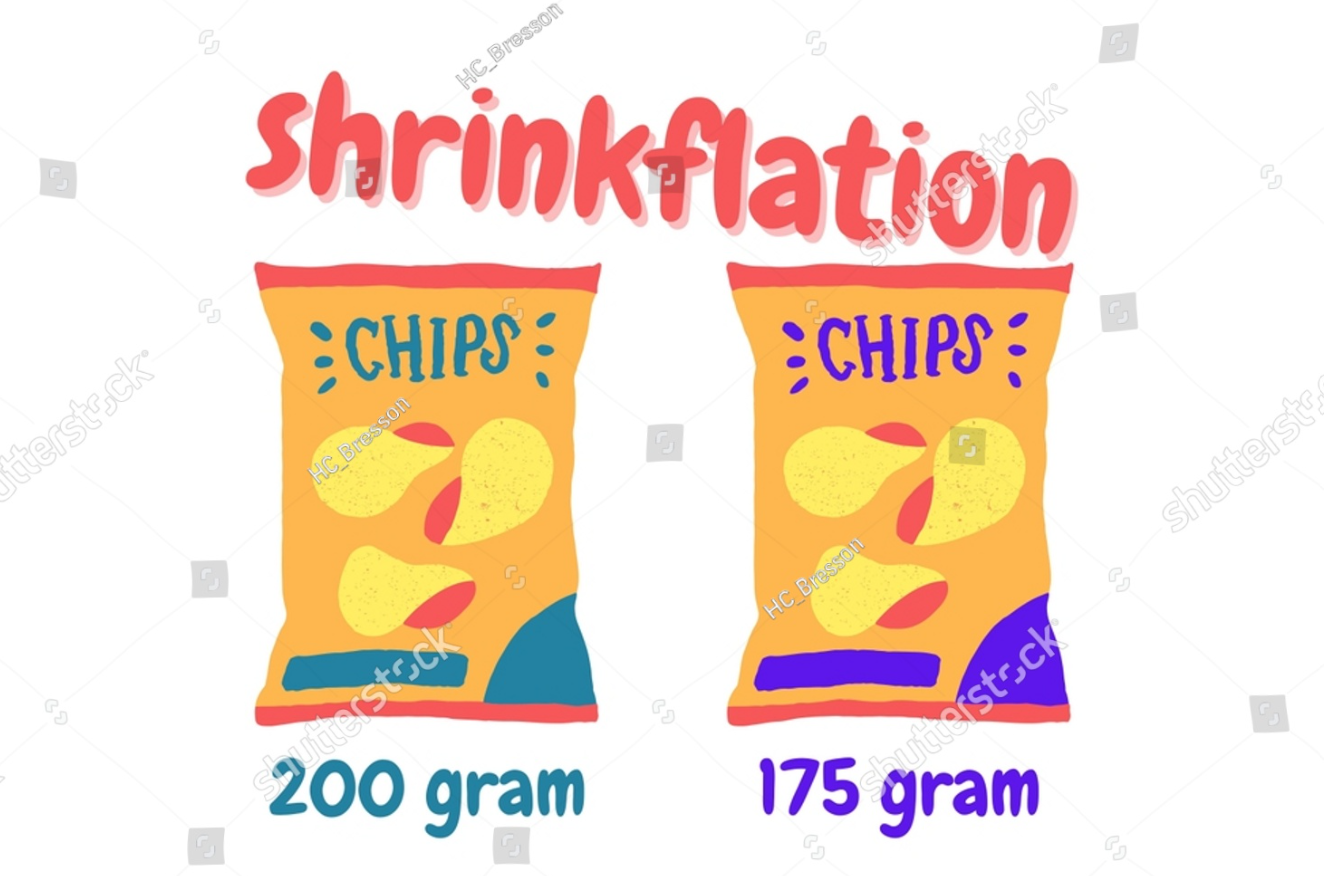
Shrinkflation: The Hidden Face of Inflation That Disproportionately Affects the Less Well-Off

Inflation is a common economic phenomenon that affects the prices of goods and services over time. While it is often associated with a gradual increase in prices, there is another subtle form of inflation known as shrinkflation. Shrinkflation occurs when the size or quantity of a product decreases while its price remains the same or increases. This deceptive tactic allows manufacturers and retailers to maintain profit margins while giving the appearance of price stability. Unfortunately, shrinkflation disproportionately affects those who are less well-off, as they lack the financial strength to bulk buy their way out of this hidden inflation.

Understanding Shrinkflation

Shrinkflation is a strategy employed by companies to counteract rising production costs without directly increasing the price of their products. Rather than raising the price tag, they reduce the quantity or quality of the product while keeping the price unchanged. For example, a chocolate bar that used to weigh 100 grams might now weigh 90 grams, or a bag of crisps that was once filled to the top might now contain more air than actual product. This reduction in size can be subtle, making it difficult for consumers to notice the change at first glance.


Reasons for Shrinkflation

Several factors contribute to the rise of shrinkflation. Manufacturers often face increased costs for raw materials, energy, transportation, and labor. Rather than passing these costs directly onto consumers through price hikes, they opt to shrink the product to maintain profit margins. This strategy is less likely to deter customers, as they may not immediately notice the smaller size or quantity. Additionally, companies may use shrinkflation as a way to mitigate the impact of inflation on their profitability, allowing them to remain competitive in the market.

Disproportionate Impact on the Less Well-Off

The hidden nature of shrinkflation means that those who are less financially well-off bear the brunt of its impact. While the price of the product remains the same or even increases, the reduction in quantity means that consumers are receiving less value for their money. This is particularly detrimental to individuals or families who rely on certain products as part of their daily essentials. The cumulative effect of shrinkflation can erode purchasing power over time, leading to an increased financial strain on those already struggling to make ends meet.

The less well-off face a unique disadvantage when it comes to dealing with shrinkflation. They often lack the financial resources to buy in bulk or stock up on goods during sales or promotions, which could help offset the effects of shrinkflation. Bulk buying can lead to savings per unit, but this option is typically not feasible for individuals with limited funds or restricted storage space. As a result, they are forced to pay the same price for less product, effectively reducing their standard of living and exacerbating economic inequality.

Shrinkflation is a covert form of inflation that affects consumers by reducing the size or quantity of products while maintaining the same or higher prices. The less well-off are disproportionately impacted by shrinkflation, as they lack the financial strength to mitigate its effects through bulk buying or alternative purchasing strategies. Recognising this hidden inflation and its consequences is crucial for consumers to make informed decisions and policymakers to address the systemic inequalities it perpetuates. Increased transparency and consumer awareness are vital steps towards a fairer marketplace that protects the interests of all consumers, regardless of their financial standing.

Understanding the Impact of Inflation

Inflation refers to the general increase in prices of goods and services over time. It means that, on average, the cost of purchasing everyday items and services rises, resulting in a decrease in the purchasing power of money. This phenomenon affects everyone in society, but it is often argued that inflation has a more pronounced impact on the poor compared to the rich. In this explanation, I will explore why this is the case and delve into some perspectives on the deliberate transfer of wealth from the poor to the rich through inflation.

The Effect of Inflation on the Poor

Inflation impacts the poor more significantly due to their relatively lower income and limited ability to adjust to rising prices. Here are a few reasons why:

a. Basic Necessities: The poor typically spend a larger portion of their income on essential goods and services, such as food, housing, and healthcare. When prices rise, they face difficulties in affording these necessities, as their income may not increase proportionally.

b. Limited Savings: The poor often have little or no savings to buffer the effects of inflation. Consequently, they are forced to rely heavily on their current income, which loses value as inflation erodes purchasing power.

c. Wage Stickiness: In many cases, wages do not rise quickly enough to keep pace with inflation. This means that the poor may experience stagnant or slow-growing incomes, exacerbating the strain of rising prices.

d. Access to Credit: As inflation increases, borrowing becomes more expensive. Since the poor often rely on loans and credit to meet their needs, higher interest rates make it even more challenging for them to borrow and invest in their future.

The Effect of Inflation on the Rich

While the impact of inflation on the rich is not as severe, they are better positioned to mitigate its effects due to the following factors:

a. Diverse Investments: The rich have access to a broader range of investment options, such as stocks, real estate, and other assets. These investments can act as a hedge against inflation, as their value may increase alongside rising prices.

b. Wage Flexibility: High-income earners often have more negotiating power and can demand salary increases that keep pace with or even surpass inflation rates. This helps maintain their purchasing power over time.

c. Financial Instruments: The rich can leverage financial instruments, such as inflation-indexed bonds or commodities, which are specifically designed to provide protection against inflationary pressures.

d. Economic Influence: The rich often have more political and economic influence, which can enable them to shape policies that favor their interests during periods of inflation.

Deliberate Wealth Transfer Perspective

Some economists argue that inflation can be used as a mechanism to transfer wealth from the poor to the rich deliberately. Their viewpoints include:

Wealth Redistribution: Inflation can erode the value of cash and savings, disproportionately impacting those with fewer assets. This redistribution of wealth from cash holders to asset holders can exacerbate existing wealth disparities.

Debt Burden: Inflation can erode the real value of debts owed by the rich, benefiting them, while the poor, burdened by debt, face challenges in repaying loans with depreciated currency.

Asset Ownership: Inflation tends to drive up the value of assets like real estate and stocks, which are often predominantly owned by the wealthy. As a result, the rich see an increase in their wealth, while the poor struggle to afford these appreciating assets.

Inflation affects the poor more severely than the rich due to their limited resources, lower income levels, and higher reliance on essential goods and services. The ability of the rich to diversify their investments, negotiate higher wages, and access financial instruments helps them mitigate the impact of inflation. Furthermore, some economists argue that inflation can function as a deliberate mechanism to transfer wealth from the poor to the rich through wealth redistribution, debt dynamics, and asset ownership disparities. It is important to consider these factors when analysing the broader implications of inflation on society.